Nobody Expected a CNC Router to Do This to a Bar of Soap
A bar of soap is probably not the first material that comes to mind when you think about CNC machining. That is exactly why I wanted to try it. In this episode of Will It CNC, I put a giant bar of soap on the machine and gave myself three attempts to figure out the workholding, bits, speeds and feeds, and what kinds of projects this material could actually handle.
The result surprised me. Soap machined far better than I expected, especially for 3D relief carving, and it opened up some genuinely useful project and product ideas.
The Challenge: Can Soap Hold CNC Detail?
The material was a Duke Cannon “big brick” of soap. Unlike wood, there is no grain to work around. It is a uniform solid material. Going in, my biggest concerns were whether the soap would chip apart, whether it would melt from spindle heat, and how I could hold a slippery bar securely enough to machine it.
Double-sided tape and screws were not practical, so I started with a vise that applied pressure evenly across the sides of the bar.
Attempt 1: A 3D Crocodile Relief
For the first test, I went straight to a 3D relief carve. I used the crocodile relief because it contains smooth surfaces and fine detail, which makes it a good test of how well the material can hold a carved image.
Starting setup
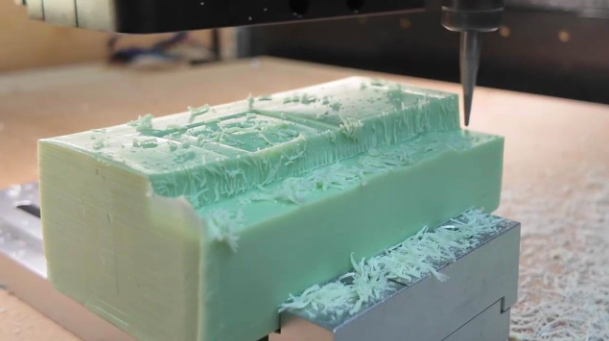
Clean soap chips forming as the 3D toolpath progresses.
Bit: tapered ball-nose bit
Feed rate: 200 inches per minute
Spindle speed: 8,000 RPM
Estimated carve time: about 11 minutes
My theory was to move quickly while running the spindle as slowly as the machine allowed. I wanted to reduce the chance of generating enough heat to soften or melt the soap. These settings are starting points only. Your machine, spindle, bit, and material can behave differently.
The chips immediately looked promising. Instead of turning into a sticky mess, the soap produced clean chips, the cutter stayed clean, and the carve was surprisingly quiet.
The first attempt was a huge success. The workholding held, the tapered ball-nose did not gum up, and the soap preserved far more fine detail than I expected.
Attempt 2: Pushing the Detail Further
With the first relief working, I wanted to find out how far the detail could go. For the second attempt, I switched to a 10-degree tapered ball-nose with a much finer tip and used a deeper, longer relief carve.
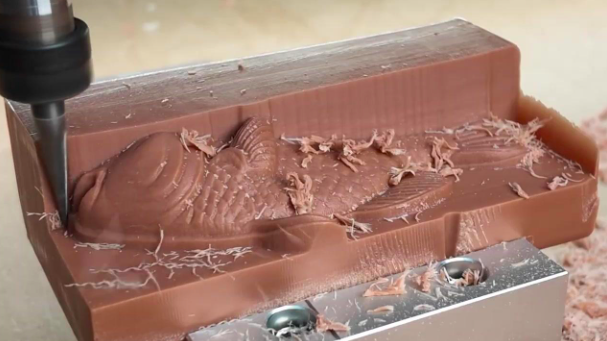
Fine-detail relief carving on the second bar of soap.
The first pass at this setup exposed a boundary issue. Although the zero position was correct, the tapered cutter reached beyond the expected area and took too aggressive of an initial bite. I increased the boundary offset from 1/8 inch to 1/4 inch so the tool would enter the material more safely.
That adjustment worked. The second project took roughly an hour, but the finished detail was excellent. The finer cutter allowed the soap to retain small features that I would normally expect a soft material to lose.
Attempt 3: Carving Text Into Soap
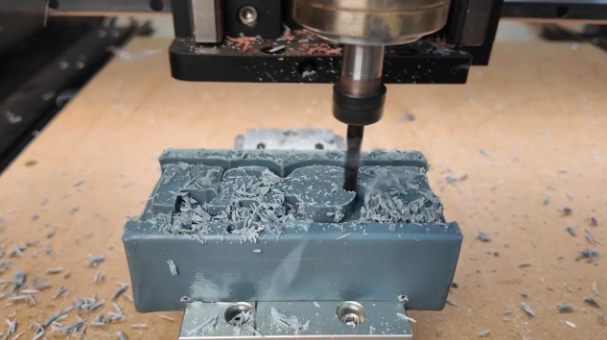
The smaller upcut bit clears the inside of the letters.
The first two attempts proved that soap is excellent for 3D relief carving. For the third test, I wanted to see how it handled conventional text machining and a more standard upcut cutter.
The first text-cutting approach was aggressive, so I switched to a 1/8-inch upcut bit to get cleanly inside the letters and finish the details. The soap still handled the machining well.
I also flipped the bar and machined the opposite side, creating a novelty two-sided soap project.
What I Learned About CNC Machining Soap
The final verdict is an easy yes: soap can absolutely be CNC machined. More importantly, it can hold impressive detail.
3D relief carving works exceptionally well.
A vise can provide reliable workholding if the soap has parallel sides and is clamped carefully.
Lower spindle RPM appears to be more important than simply slowing the feed rate when trying to avoid heat.
Faster feed rates actually produced better cut quality in portions of the test than very slow feed rates.
Fine tapered ball-nose cutters can produce remarkably detailed reliefs.
Standard upcut bits can be used for text and conventional toolpaths.
During testing I reduced the feed rate as low as 40 IPM without melting the soap, but the results suggested that higher feed rates could actually improve cut quality. I did not test high spindle speeds such as 16,000 or 20,000 RPM, so those conditions are outside what this experiment proved.
What Can You Make With CNC-Machined Soap?
This experiment started as a weird-material test, but it quickly turned into a list of potential projects. Because soap is inexpensive, easy to source, and surprisingly machinable, it could be useful for personalized gifts or as an add-on to products you already sell.
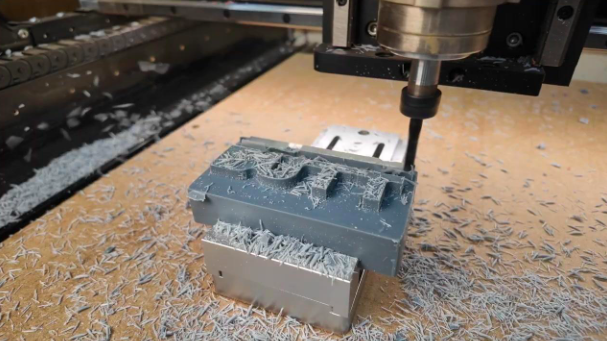
Final text machining on the opposite face of the soap.
Custom logos
Names and personalization
3D relief artwork
Novelty sayings
Branded promotional soap
Custom soap paired with a CNC-made soap tray
That last idea may be the most practical business opportunity. If you already make wooden soap trays or bathroom accessories, a customized bar of soap could become an inexpensive upsell that makes the overall product feel more unique.
Final Verdict: Will Soap CNC?
Yes. Of all the unusual materials I have tested, soap produced some of the most unexpectedly clean results. It did not melt, it did not crumble apart, and it held fine 3D detail extremely well. The biggest lessons were to keep the spindle speed under control, use sensible workholding, and match the cutter to the level of detail you want.
Will It CNC is all about finding out what happens when we put unusual materials on a CNC router and push beyond the projects we normally make. Soap is officially on the list of materials worth experimenting with.